
Owner's Representation
A disciplined extension of your team, managing process, accountability, and decisions exclusively on the owner's behalf, across the United States and the Caribbean.
What does an owner's representative do?
An owner's representative acts solely on behalf of the property owner throughout a development or construction project. The owner's rep manages the architects, engineers, contractors, and consultants, oversees budget, schedule, and quality, and makes sure every decision serves the owner's interests rather than anyone else's. Unlike the general contractor or the design team, the owner's representative has no competing incentive: the owner is the only client.
Most owners build occasionally. Their contractors, architects, and consultants do this every day. An owner's representative levels that field, bringing the owner the same depth of experience that sits on the other side of every negotiation.
Owners who have a design team and a contractor, or are about to hire them, and want them held accountable to the owner: institutions, developers, family offices, and associations.
Manage the architect, contractor, budget, schedule, approvals, and closeout on your behalf, from planning through turnover.
A senior counterpart on every decision, bid leveling and contract review, change order and pay application review, and one monthly Owner's Report.
Fees are a fixed fee or a monthly retainer for a defined scope and duration, quoted in writing before the work starts. Aventra takes no percentage of construction cost and no fee from any contractor, vendor, or consultant on the project.
Lanaar Elementary School today, and more than twenty schools, churches, and civic buildings delivered for the Archdiocese of Miami, Miami-Dade County Public Schools, and others before the firm was founded.
One conversation, no obligation. Where it helps, a fixed-fee budget and contract review first.
Who does what: owner, owner's representative, architect, contractor
The roles are often confused, and the confusion is where accountability leaks. The table below shows how the responsibilities typically divide on a project with Aventra as owner's representative.
| Responsibility | Owner | Aventra (owner's rep) | Architect | Contractor |
|---|---|---|---|---|
| Business objectives and approvals | Decides | Frames the decision and advises | Supports | Supports |
| Design management | Approves | Coordinates and challenges | Designs | Constructability input |
| Budget and change control | Approves | Tracks, reviews, and recommends | Design cost input | Prices and proposes |
| Construction means and methods | Not responsible | Monitors the owner's interests | Observes design conformance | Responsible |
| Pay applications | Funds | Reviews and recommends | May certify, per contract | Submits |
| Schedule | Sets key dates | Tracks and challenges | Design milestones | Builds and updates |
Explanatory, not contractual. The exact division of responsibilities on any project is set by its agreements.
Why owners choose Aventra
Aventra is independent: no construction arm, no design arm, and no affiliated contractors, so the only outcome we are paid for is the owner's. The firm is led by a Florida Certified General Contractor and former chief executive of an international construction management firm, and the leadership that scopes an engagement stays on it from the first meeting through closeout. Fees are a fixed fee or a monthly retainer for a defined scope, never a percentage of construction cost. More about the firm.
Why it matters now
Material prices and tariffs now move within the life of a single project, skilled trades are in short supply, and lenders, boards, and investors increasingly expect independent oversight of budgets, pay applications, and draws. An owner who builds once a decade is negotiating against firms that price this risk every week.
Owner's representation services, by phase
We scope each engagement to the project. An owner can engage Aventra for the full lifecycle or for the phases where the exposure is greatest.
Planning and preconstruction
- Needs assessment, program definition, and project budget development and validation
- Master schedule and delivery-method strategy: design-bid-build, construction manager at risk, or design-build
- Architect, engineer, and consultant selection and contract negotiation support
- Design review and constructability input at every milestone, with cost checks against the budget
- Permitting strategy and coordination with expediters, the city, and the county
Procurement
- Contractor prequalification, bid documents, and competitive bidding
- Bid leveling, so the low number is actually the low number
- Contract negotiation support alongside the owner's counsel: guaranteed maximum price terms, allowances, contingency, insurance, and bonding
- Early purchase strategy for long-lead and price-volatile materials
Construction
- Site observation, progress meetings, and accountability across the project team
- Budget, commitments, and cost-to-complete tracking
- Change order review and independent pricing
- Pay application and lender draw review, with lien release tracking
- Schedule tracking and recovery planning
- Quality oversight and coordination of the owner's testing and inspection consultants
- The Aventra Owner's Report: a monthly, plain-language account of budget, schedule, risks, and decisions for owners, investors, lenders, and boards (redacted sample, PDF)
Closeout and turnover
- Punch list management and commissioning oversight
- Certificates of occupancy, final inspections, and permit closeout
- Warranties, operation and maintenance manuals, as-built documents, and staff training
- Final payment, final lien releases, and contract closeout
FF&E and move-in
- Furniture, fixtures, and equipment procurement coordination, and operating supplies and equipment for hospitality projects
- Technology, audiovisual, and security vendor coordination
- Move management and operational readiness, timed to the owner's calendar
Capital programs and multiple projects
For institutions, associations, and owners with more than one project, Aventra manages the program as a whole: consistent standards and contracts, priorities set against available funding, and one report across every project, so leadership sees the full picture rather than a stack of separate updates.
Project rescue
Owners also bring us in when a project is already in trouble: over budget, behind schedule, or stalled in a dispute. We assess where the project actually stands, separate what is recoverable from what is not, and lead the recovery plan, including renegotiating or replacing members of the project team where that is what the project requires.
Who we represent
- Religious institutions, schools, and nonprofits that build rarely and answer to boards, committees, and donors.
- Developers, investors, and family offices building multifamily, mixed-use, and hospitality projects without a full in-house team.
- Condominium associations facing milestone inspections, reserve studies, and structural repair programs.
- Resort and branded residence owners delivering in the Caribbean.
- Private clients building high-end custom residences.
Ways to engage Aventra
Project owner's representation
Full representation of one project from planning through turnover, at any scale: a parish hall, a classroom building, a renovation, a rental community, or a campus program.
Predevelopment advisory
Counsel before a project is committed: feasibility, program, budget, phasing, and the case for the capital, continuing into full representation if the project proceeds.
Program-level support
For an office responsible for many properties: procedures and contract forms, contractor prequalification, estimate review, portfolio prioritization, and independent review of projects brought forward.
Every engagement begins with one conversation and, where it helps, a fixed-scope review before any larger commitment. How an engagement begins.
The design and construction phase is where inexperienced sponsors quietly lose money and call it bad luck.
We have priced and built what our clients are developing, and we bring that judgment to the owner's side before the contracts are signed, when it still changes the outcome.
Owner's representation, answered plainly.
How is an owner's representative different from a construction manager?
A construction manager typically works for, or alongside, the builder and is compensated through the construction process itself. An owner's representative works only for the owner, with no stake in the contractor's outcome, and oversees the construction manager, general contractor, and design team on the owner's behalf.
When should we engage an owner's representative?
Before major commitments are made: ideally at feasibility or early design, and certainly before contractor selection. The largest savings come from decisions made early, when budget, delivery method, and contract terms are still open. That said, owners also bring us in mid-project when budget, schedule, or quality is drifting.
What does an owner's representative cost?
Fees are proposed as a fixed fee or a monthly retainer for a defined scope and duration, disclosed in full and reported against each month. Aventra takes no percentage of construction cost and no fee from any contractor or vendor, so our compensation never rises when the project's cost does. On complex projects, effective owner's representation routinely offsets its own fee through tighter bids, avoided change orders, and disciplined draw review.
Where do you work?
Across the United States and the Caribbean. Current engagements are in Florida, the Dominican Republic, Belize, and The Bahamas. Outside Florida we work as we do in the islands: senior leadership on site at the points that matter, and local design, permitting, and legal professionals engaged for the owner.
Can you represent us on a custom residence?
Yes, for a select group of private clients. High-end custom residential owner's representation is handled with discretion, confidentiality, and senior-level attention, with the same rigor we bring to institutional projects.
Is Aventra insured?
Aventra carries general liability and professional liability (errors and omissions) insurance, and provides certificates of insurance on request. Institutional owners, lenders, and associations can request certificates naming them as certificate holder before an engagement begins.
Can you take over a project that is already in trouble?
Yes. We begin with an independent assessment of budget, schedule, contracts, and work in place, then lead the recovery plan. The earlier we are called, the more there is to recover.
Do you work with boards and building committees?
Yes. Much of our work is for owners governed by a board, a committee, or a diocesan or institutional office. We prepare the information each approval requires and report in plain language so decisions can be made quickly and on the record. See owner's representation for institutional owners.
Do you replace our architect or contractor?
No. The architect designs and the contractor builds. We represent the owner in managing both, and we can work with a team the owner has already selected or help select one.
See it in practice.
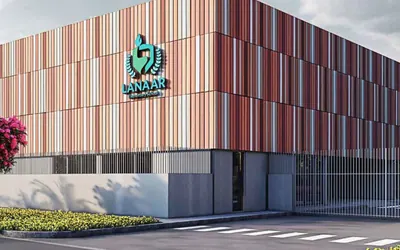
Owner's representation for a private school's campus expansion in North Miami Beach.
Bring an owner's representative in before the budget is approved.
Tell us about the project. We respond within one business day.