
Religious Institutions, Schools & Nonprofits
Independent owner's representation for institutions that build rarely, answer to boards, committees, and donors, and cannot afford to get it wrong.
Institutions build rarely. Everyone across the table builds every day.
A parish, a school, or a nonprofit may undertake one significant building project in a generation. Its architect, contractor, and consultants do this every week. The pastor, head of school, or executive director is asked to make decisions worth millions of dollars, outside their training, while still running the institution. Owner's representation closes that gap: one experienced, independent firm working only for the institution, from the first budget to the day the doors open.
Dioceses, parishes, and congregations; private, parochial, and charter schools; nonprofits and cultural institutions; condominium associations facing a repair program.
Governance by committee and board, funding that arrives in stages, campuses that never close, stewardship of donated dollars, and older buildings with deferred maintenance.
Define the project before it is approved, support each approval, select the team through a documented process, match the work to the funding, oversee design and construction, and report in plain language.
Fees are a fixed fee or a monthly retainer for a defined scope and duration, quoted in writing before the work starts. Aventra takes no percentage of construction cost and no fee from any contractor, vendor, or consultant on the project.
Lanaar Elementary School today, and more than twenty schools, churches, and civic buildings in South Florida delivered by Aventra's founder before the firm, including nine for the Archdiocese of Miami.
One conversation with the pastor, head of school, or committee chair. No obligation, and we present to boards when asked.
Who we serve
- Religious institutions: dioceses and their building offices, parishes, congregations, and religious communities of every faith.
- Schools: private, parochial, and charter schools, colleges, and early learning centers.
- Nonprofits: foundations, social service and healthcare organizations, cultural institutions, and clubs.
- Condominium associations: boards and management companies facing milestone inspections, reserve studies, and the repair programs that follow. See below.
Why institutional projects are different
- Governance. Decisions pass through a pastor or head of school, a finance council, a building committee, a board, and often a diocesan or central office with its own procedures. Each approval needs the right information at the right time.
- Funding. Capital campaigns, donor gifts, and financing arrive in stages. The project has to be phased and contracted so that commitments never run ahead of funds.
- Operations never stop. Work is planned around worship, the school calendar, and occupied campuses, with children and the public on site.
- Stewardship. Every dollar was given by someone. The institution owes its donors a clear record of how the money was spent and what it bought.
- Older buildings. Many campuses carry decades of deferred maintenance, recertification requirements, and hurricane exposure that have to be weighed against new construction.
What we do for institutional owners
- Define the project before it is approved: needs, program, realistic budget, and schedule, prepared in the form the committee, board, or building office requires.
- Support the approval process: documentation and presentations for each stage of institutional and diocesan review.
- Select the team: architect, engineers, and contractor chosen through a fair, documented process, with contracts that protect the institution.
- Match the work to the funding: phasing, early purchases, and contract terms aligned with campaign receipts and financing.
- Oversee design and construction: cost control, change order review, pay application review, schedule, quality, and site safety coordination on an occupied campus.
- Report in plain language: a monthly report the pastor, the board, and the finance council can act on.
- Close out and move in: inspections, certificates of occupancy, warranties, furniture and equipment, and a move timed to the institution's calendar.
- Manage the wider program: for a diocese, a school network, or a multi-site organization, consistent standards, priorities, and reporting across many projects, and facility assessments and capital planning for existing buildings.
Condominium associations
A condominium board answers to its owners the way a parish council answers to its donors, and faces the same problem: a volunteer board running a construction project it did not choose. Florida's milestone structural inspection and structural integrity reserve study requirements have turned that into a repair program measured in millions of dollars for many buildings in Miami-Dade and Broward. The engineer of record defines what must be repaired; Aventra turns that scope into a budget the owners can trust, a contract that protects the association, and a project delivered in an occupied building.
- Review of the engineer's findings: a builder's reading of the inspection report, the reserve study, and the repair scope, so the board knows what is required now, what can be phased, and what drives the cost.
- Procurement and contract terms: contractor prequalification, bid leveling on unit prices and estimated quantities, and the terms that matter in restoration work: quantity verification, allowances, retainage, lien releases, and resident protections.
- Funding support and oversight: budgets and draw schedules for special assessment and loan decisions, field verification of repair quantities, change order and pay application review, and coordination of safety and resident access with management.
- Reporting to the board and the owners: a monthly record that stands up in any owners' meeting, and presentations at owners' meetings when needed.
How fees work
Fees are a fixed fee or a monthly retainer for a defined scope and duration, never a percentage of construction cost, so our compensation never rises when the project's cost does. We work inside the owner's own procedures, including archdiocesan project procedures, approvals, and insurance requirements, and we provide certificates of insurance naming the institution before an engagement begins.
Institutions engage Aventra for a single project, for predevelopment advisory before a campaign is launched, or for program-level support across many properties. The forms of engagement.
Why institutions engage Aventra
- We have built these buildings. Parish halls, classroom buildings, retreat centers, libraries, and the largest public school in Miami-Dade history, delivered as the contractor. We know how a bid is priced and how a change order is written, because we have written them.
- Fluent in South Florida. Miami-Dade and Broward permitting, the High-Velocity Hurricane Zone code, flood and resilience requirements, and building recertification, applied to campuses that stay open through construction.
- Proven with institutional owners. The Archdiocese of Miami, Miami-Dade County Public Schools, the State of Florida, and South Florida municipalities. References from institutional owners, pastors, and school leadership are available on request.
Read the Institutional Capability Statement (PDF)
Experience
Aventra serves today as owner's representative to a private school expanding its campus in North Miami Beach. Before founding the firm, Aventra's leadership spent more than two decades building churches, schools, and civic facilities in Miami-Dade and Broward, including nine projects for the Archdiocese of Miami and the largest school project in the history of Miami-Dade County Public Schools.
-
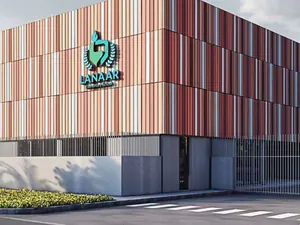 Lanaar Elementary School
Campus expansion for a growing private school, delivered around the academic calendar with children on site: Aventra manages the architect, contractor, and consultants, reviews budget and pay applications, coordinates city and county approvals, and reports to the board in plain language.
Prior experience: faith-based facilities
-
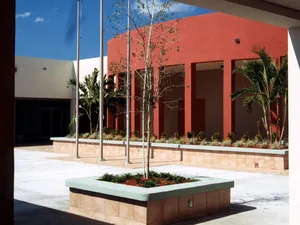 St. Timothy Catholic Church
Three buildings delivered in succession on one operating parish campus: McDermott Hall, the parish hall and courtyard; the Msgr. Gerard T. La Cerra Parish Center; and the Sister Carolyn Learning Center for the parish school. Each was built while the church, the school, and the parish ministries stayed in daily use.
-
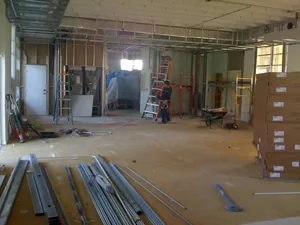 MorningStar Renewal Center
Gut renovation of the Archdiocese's retreat and conference center, kept in operation throughout the work.
-
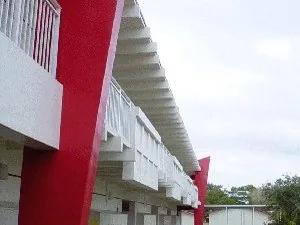 Monsignor Edward Pace High School
Classroom building for the Archdiocese's high school.
-
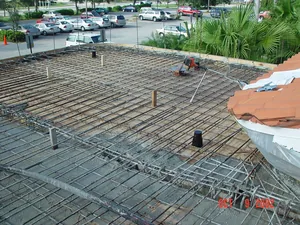 Mother of Christ Catholic Church
New parish facilities, delivered ground-up.
Also for the Archdiocese of Miami: St. Louis Catholic Church in Pinecrest, Saint Francis de Sales Catholic Church in Miami Beach, and the Radio Paz 830 AM broadcast studios. Other faith-based owners include Second Baptist Church (fellowship hall), Riverside Gordon Funeral Home, and Lowe-Hanks Funeral Home.
Prior experience: schools and civic facilities
-
South Dade Senior High School
$79.6 million, nearly 400,000-square-foot replacement campus (State School CCC-1), the largest and most expensive school project in the history of Miami-Dade County Public Schools: design coordination, subcontractor procurement, budget, and schedule on a highly visible public program.
-
Country Club Middle School
New middle school (State School NN-1) delivered design-build, alongside a design-build classroom addition to North Twin Lakes Elementary School in Hialeah.
-
Norman S. Edelcup / Sunny Isles Beach K-8
Preconstruction services for a new K-8 campus (State School BB-1).
-
Gulliver Academy
Facilities for one of South Florida's leading independent schools; also four Miami-Dade campuses for Lincoln-Martí Schools in Hialeah, Miami, and West Miami.
-
John Pennekamp Coral Reef State Park
Park facilities for the State of Florida; also Brockway Memorial Library for Miami Shores Village and the City of North Miami Beach Wastewater Division offices.
† Delivered by Aventra's founder as general contractor, construction manager, and project manager with Brown & Brown Construction, RPA Construction Group, MCM Corp., and Pavarini Construction, prior to founding the firm. A complete project list, with addresses, is available on request.
Every engagement begins with one conversation and, where it helps, a fixed-scope review before any larger commitment. How an engagement begins.
Donated dollars deserve the rigor of institutional capital.
We read the drawings, level the bids, and check every change order and pay application with a builder's eye, and we put it on the record, so the institution can show its board and its donors exactly where the money went.
Institutional projects, answered plainly.
We already have a building office or a facilities director. Why add an owner's representative?
An owner's representative extends that office rather than replacing it. A central office overseeing dozens of locations cannot be on every site every week. We carry the day-to-day management of a project, or a group of projects, and report to the office in its own format.
Our building committee includes an architect and a contractor. Is that enough?
Volunteer expertise is valuable, and we work closely with committees. But a committee meets monthly and its members have their own businesses to run. A project needs someone accountable every day, with no relationship to any of the firms being hired.
When should we engage an owner's representative?
Before the architect is hired, if possible. The budget, the program, and the delivery method set at the beginning decide most of what the project will cost. We are also engaged mid-project when cost, schedule, or quality is drifting.
How is the engagement scoped?
By phase, so the institution's commitment tracks its approvals and its funding. Planning, design, construction, and closeout can each be authorized separately.
Do you work with institutions of every faith?
Yes. We represent religious institutions of every faith, as well as independent schools and secular nonprofits.
For a condominium repair program, isn't the engineer supposed to manage the repairs?
The engineer of record defines the repairs, prepares the documents, and inspects the work for structural compliance, and many also administer the contract. An owner's representative covers what sits around that role: budget, procurement, contract terms, quantities, cost, schedule, resident coordination, and reporting to the board. The two roles work together, and Aventra does not replace the engineer of record.
When should a condominium board bring Aventra in?
As soon as the milestone inspection report or the reserve study points to significant repairs, and before the project goes to bid. The budget, the bid documents, and the contract terms decide most of what the owners will pay.
See it in practice.
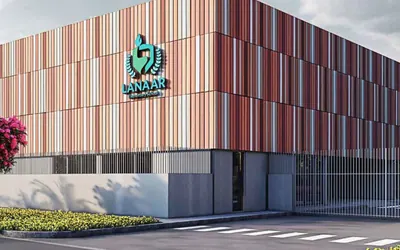
Owner's representation for a private school's campus expansion in North Miami Beach.
What each role is paid to do, where they overlap, and which one an owner actually needs.
Give the board a project it can account for.
Tell us about the project. We respond within one business day.